- Home
- About
- Treatments
- Testimonials
- Gallery
- Blogs
- Technology
- Contact
- Schedule A Consultation
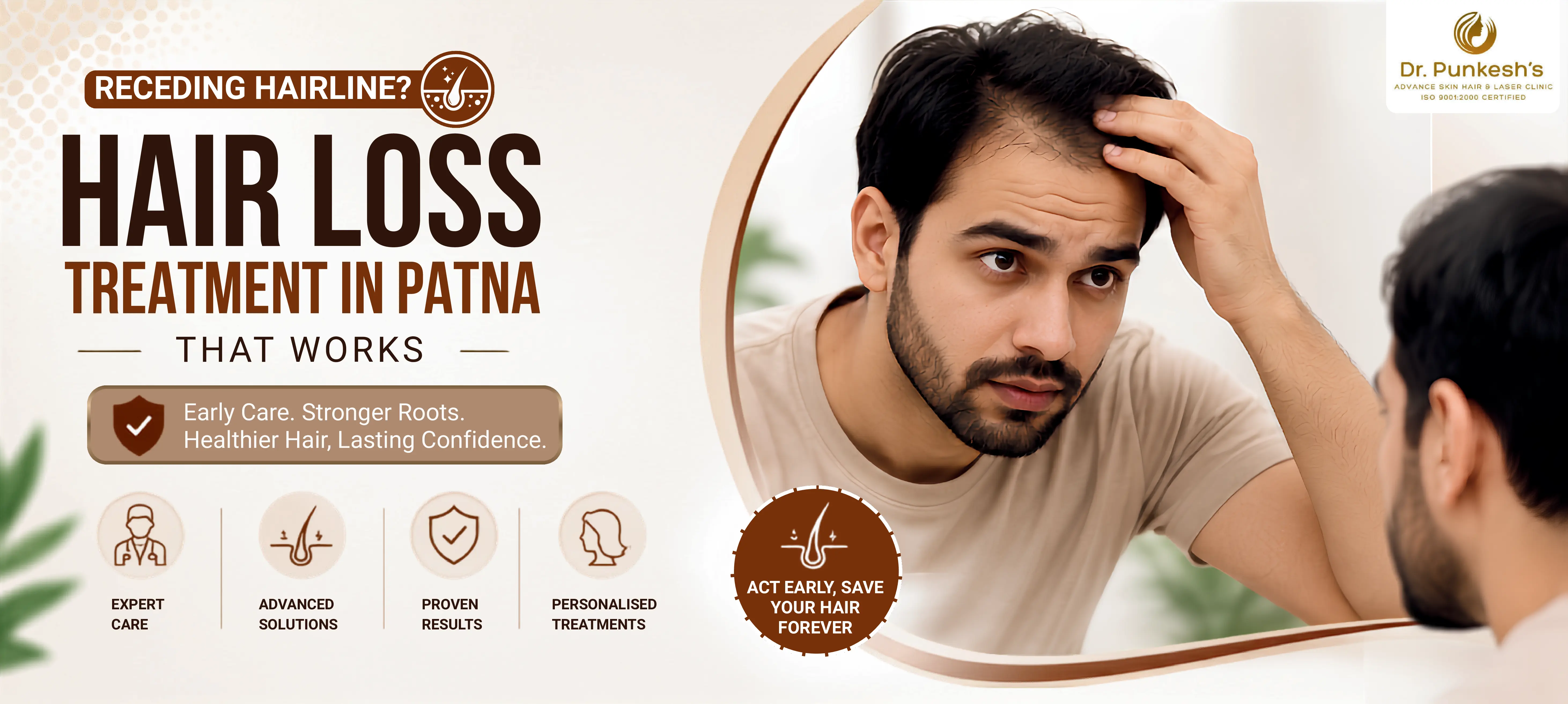
You noticed it in a photo, or under harsh bathroom lighting, or in the extra strands on your pillow and in the shower drain. Your hairline is not quite where it used to be. Maybe the corners are creeping back, or the crown is thinning, or your parting looks wider than it did last year. It is easy to tell yourself it is nothing. But here is the honest truth about hair loss: the earlier you act, the more hair you can save.
Most people wait far too long. They try oils, shampoos, and home remedies for months or years while the follicles quietly shut down, and by the time they seek real help, a lot of the hair is already gone. This article walks you through the early signs of balding you should not ignore, why acting early matters so much, and the hair loss treatment options that can actually stop it.
Before you panic, know this: losing some hair every day is entirely normal. On average, it is normal to shed between 50 and 100 hairs a day, and those hairs grow back. This is just your hair's natural cycle at work.
The problem begins when you are losing noticeably more than that, when the hair that falls is not being replaced, and when you start to see thinning, a receding hairline, or a widening bald patch. That is the difference between ordinary shedding and genuine hair loss, and knowing which one you have is the first step. The American Academy of Dermatology explains this distinction clearly: everyday shedding is not a sign of balding, but a receding hairline, a bald spot, or overall thinning is.
Hereditary hair loss, known medically as androgenetic alopecia, is the most common cause of balding in both men and women. It tends to creep in slowly, which is exactly why it is so easy to miss until it is advanced. Watch for these early warning signs.
1. A receding hairline
In men, one of the very first signs of hereditary hair loss is often a receding hairline or a bald spot at the top of the head, a point confirmed by the American Academy of Dermatology. It usually starts at the temples, with the hairline taking on an "M" shape as the corners move back.
2. A widening part
In women, and in many men too, hair often thins on the top of the scalp first. If your parting looks wider than it used to, or more scalp is visible through your hair, that is an early sign worth taking seriously.
3. Thinning at the crown
The crown, at the back of the head, is a common early site of thinning. Because you cannot easily see it yourself, it often goes unnoticed until someone points it out or you catch it in a photo.
4. More hair fall than usual
Finding significantly more hair than normal on your pillow, in the shower, on your comb, or on your clothes is a signal. Occasional heavy shedding can have temporary causes, but persistent, heavy hair fall over weeks and months needs attention.
5. Hair that looks finer and weaker
Before hair disappears entirely, it often becomes thinner, shorter, and weaker with each growth cycle, a process called miniaturisation. If your hair feels finer and limper than it used to, the follicles may be shrinking.
This is the single most important message of this article. With hereditary hair loss, treatment works best when it is started early. The earlier you begin, the more hair you can keep.
Here is why. In the early stages, the hair follicles are weakened and shrinking, but they are still alive and still capable of producing hair. Treatment at this stage can slow or stop the loss and, in many cases, help existing hair grow back stronger. But once a follicle has been dormant for a long time and has fully closed, it can no longer produce hair, and no medicine or therapy can revive it. At that point, the only option is more invasive procedures.
In short, you are not just treating the hair you have lost. You are protecting the hair you still have. Every month of "wait and watch" is a month those follicles are under threat. This is why dermatologists stress early diagnosis and treatment.
Oils, special shampoos, diet changes, and home remedies are the first thing most people reach for. While good scalp care and nutrition genuinely support hair health, they usually cannot stop hereditary hair loss on their own, because they do not address the actual biological process shrinking your follicles.
Relying on them alone often means losing precious time. The months spent hoping a shampoo will fix genetic hair loss are months the follicles keep closing. That is the real cost of delay.
The good news is that modern dermatology offers several effective, evidence-based hair loss treatment options, especially when you start early. The right choice depends on your type of hair loss, its cause, and its stage, which is why a proper diagnosis comes first. At our clinic, these fall under our hair care treatments.
Effective treatment begins with finding the cause. A dermatologist examines your scalp and hair, sometimes with a hair analyser, and reviews your history to identify exactly what type of hair loss you have. Hair loss can also be a sign of other issues like nutritional deficiencies, thyroid problems, or stress, which is another reason self-treating is risky.
Proven medical treatments, prescribed and supervised by a dermatologist, form the foundation of care and can slow loss and support regrowth. You can learn more about our approach to hair fall treatment. Prescription-strength options are far more effective than over-the-counter products and are tailored to your needs.
GFC therapy uses growth factors derived from your own blood to stimulate the hair follicles and encourage stronger, healthier growth. It is a popular, minimally invasive option for early to moderate hair loss. Read about Growth Factor Concentrate for hair loss.
Mesotherapy delivers a tailored blend of vitamins, nutrients, and medicines directly into the scalp to nourish follicles and support hair growth, often used alongside other treatments.
LLLT uses gentle laser light to stimulate the follicles and improve hair density. It is painless and non-invasive, and is often combined with other therapies for better results.
Sometimes hair fall is worsened by scalp issues like dandruff or other conditions. Treating the underlying scalp problem is an important part of a complete plan.
Alongside professional treatment, these habits support healthier hair:
If you are noticing a receding hairline, a widening part, thinning at the crown, or more hair fall than usual, it is worth seeing a hair specialist in Patna now rather than later. A dermatologist can tell you exactly what is happening and start a plan while your follicles are still active and treatable.
At Dr. Punkesh's Advance Skin, Hair & Laser Clinic in Patna, hair loss is diagnosed and treated using evidence-based dermatology matched to your specific type and stage of hair loss. The earlier you come in, the more we can do.
Losing around 50 to 100 hairs a day is normal, and those hairs grow back. Persistent heavy shedding, thinning, or a receding hairline is a sign of hair loss that needs attention.
In many cases, yes, especially when treatment starts early while the follicles are still active. Early treatment can slow or stop loss and help existing hair grow back stronger.
Usually not on their own. Good nutrition and scalp care help, but they do not address the biological process behind hereditary hair loss. Relying only on them often means losing valuable time.
It depends on the stage. Follicles that are weakened but still active can often be helped. Follicles that have been dormant a long time and fully closed cannot regrow hair, which is exactly why acting early matters.
That depends on your type, cause, and stage of hair loss, which is why an accurate diagnosis by a dermatologist comes first, before choosing between options like medical treatment, GFC, mesotherapy, or LLLT.
A receding hairline or thinning crown is not something to wait out. Hereditary hair loss is progressive, which means it keeps advancing while you hesitate, but it is also highly treatable when caught early. The hair you still have is worth protecting.
If your hairline is moving back, do not wait until it is too late. An accurate diagnosis and the right hair loss treatment, started early, give you the best possible chance of keeping and regrowing your hair.
Worried about thinning hair or a receding hairline? Book a consultation at Dr. Punkesh's Advance Skin, Hair & Laser Clinic, Patna, for an accurate diagnosis and a hair loss treatment plan built around your scalp, while your follicles are still active.
Disclaimer :The website content is created with the aim of imparting knowledge and information about the domain called Dermatology among the people. The treatments mentioned here must not be taken as prescriptions. Also, the result for any treatment will vary from person to person as per the skin and hair condition.