- Home
- About
- Treatments
- Testimonials
- Gallery
- Blogs
- Technology
- Contact
- Schedule A Consultation
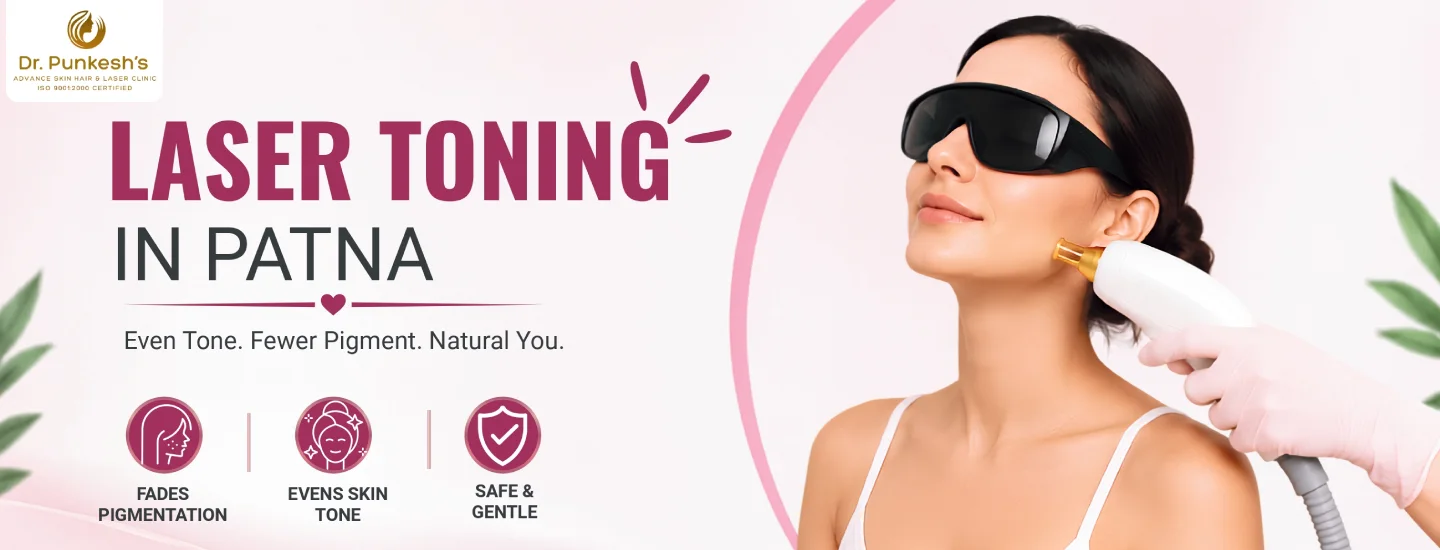
If you have stubborn pigmentation, dark patches, or an uneven skin tone that creams have not fixed, you have probably heard about laser toning. And if you are like most people, you have also heard some worrying things: that lasers bleach your skin, thin it, or burn it. Let us clear that up right away. Laser toning does not bleach your skin, and it does not strip away its natural colour. It works in a completely different way, one that is far gentler and far smarter than most people imagine.
This is a complete, honest guide to what laser toning actually does to pigmented skin, how it works, what it can and cannot treat, and what to expect. If you have been considering laser toning in Patna, this will help you understand the treatment before you ever sit in the chair.
Your skin gets its colour from melanin, a pigment made by cells called melanocytes. Pigmentation problems happen when these cells produce too much melanin in certain areas, creating dark spots, patches, or an uneven tone. This can come from sun exposure, hormones, acne marks, injury, or conditions like melasma.
The key thing to understand is that this excess melanin can sit at different depths in the skin. Some sits in the upper layers, and some sits much deeper. This is exactly why creams so often fail: they cannot reach the deeper pigment. Laser toning was designed to reach where creams cannot.
This is the part that surprises people. Bleaching creams try to lighten your whole skin by suppressing melanin everywhere. Laser toning does the opposite of a blunt approach. It is precise and selective.
Laser toning uses a specific laser, most commonly a Q-switched Nd:YAG laser, that delivers extremely short, gentle pulses of light energy into the skin. That light is absorbed only by the excess melanin, not by the surrounding healthy skin. The energy breaks the clumps of pigment into tiny particles, and your body's own immune system then clears those particles away naturally over the following days and weeks.
In other words, laser toning does not remove your natural colour. It targets and shatters only the extra pigment that is causing your dark spots and uneven tone, and lets your body dispose of it. Your normal skin tone stays intact. This selective action is well documented in dermatology literature, including reviews in the Indian Journal of Dermatology, Venereology and Leprology.
Laser toning is versatile, which is part of why it is so popular. It is commonly used for:
Because it treats so many concerns at once, laser toning is one of the most-used treatments in our pigments and spots category.
One of the biggest fears people have is that the treatment will be painful or leave them with downtime. In reality, laser toning is known for being gentle and convenient.
Your skin is cleansed, and you wear protective eyewear. During the treatment, most people feel a mild tingling or a light warmth, often compared to a rubber band gently flicking the skin. A session is usually quick, often finished within about half an hour depending on the area treated. Afterwards there may be mild redness that settles within a few hours to a day, and most people return to their normal routine straight away.
Because it is gentle, laser toning is designed to be done as a course of sessions spaced a few weeks apart, rather than a single dramatic treatment. This gradual approach is what makes it safe and natural-looking.
This varies from person to person, and honesty matters here. The number of sessions depends on the type of pigmentation, how deep it sits, how long you have had it, and your skin type. Some concerns improve noticeably within a few sessions, while stubborn conditions like melasma need more sessions and ongoing maintenance because they naturally tend to return.
Pigmentation also fades gradually, not overnight, because your body clears the shattered pigment over time and your skin renews on a cycle of several weeks. Patience and completing the recommended course are what deliver the best results. Anyone promising to erase deep pigmentation in a single sitting is not being straight with you.
When performed correctly by a qualified dermatologist, laser toning has a strong safety record and is suitable for Indian skin tones. The critical phrase there is "by a qualified dermatologist." The settings must be carefully matched to your skin type and pigmentation, because wrong settings or an untrained operator can cause side effects, including, ironically, more pigmentation.
This is exactly why laser toning should be done at a proper medical clinic under an experienced skin specialist, not at a salon. The technology is only as good as the hands and judgement behind it. You can learn about the doctor's expertise on the about the dermatologist page.
Here is something an honest clinic will always tell you: laser toning works best as part of a complete plan, not on its own. To hold your results and stop pigmentation coming back, you also need:
Laser toning does the deep work that creams cannot. Your daily habits protect and extend what it achieves.
No. It does not bleach or lighten your natural skin colour. It selectively targets and breaks down only the excess pigment causing dark spots and uneven tone, leaving your normal skin tone intact.
Most people describe only a mild tingling or light warmth, often compared to a gentle rubber band flick. It is generally very well tolerated, with little to no downtime.
Yes, when performed by a qualified dermatologist who sets the laser correctly for your skin type. Proper settings and trained hands are what keep it safe, which is why it should be done in a medical clinic rather than a salon.
Results appear gradually over a course of sessions as your body clears the pigment and your skin renews. Deeper and older pigmentation, especially melasma, takes longer and needs maintenance.
Some types, particularly melasma, can return, which is why daily sun protection and a maintenance plan are essential to keep your results.
Laser toning is not bleaching, and it is not a gimmick. It is a precise, dermatologist-led treatment that reaches the pigment creams cannot, shatters only the excess melanin, and lets your body clear it away, revealing a more even, brighter, natural-looking skin tone over a series of gentle sessions.
Done by the right hands, with sun protection and the right aftercare, laser toning is one of the most effective options available for pigmentation and uneven skin tone. If creams have let you down for years, this may be the approach that finally works.
Want to know if laser toning is right for your skin? Book a consultation for laser toning in Patna at Dr. Punkesh's Advance Skin, Hair & Laser Clinic, and get an assessment and a plan built around your skin.
Disclaimer :The website content is created with the aim of imparting knowledge and information about the domain called Dermatology among the people. The treatments mentioned here must not be taken as prescriptions. Also, the result for any treatment will vary from person to person as per the skin and hair condition.