- Home
- About
- Treatments
- Testimonials
- Gallery
- Blogs
- Technology
- Contact
- Schedule A Consultation
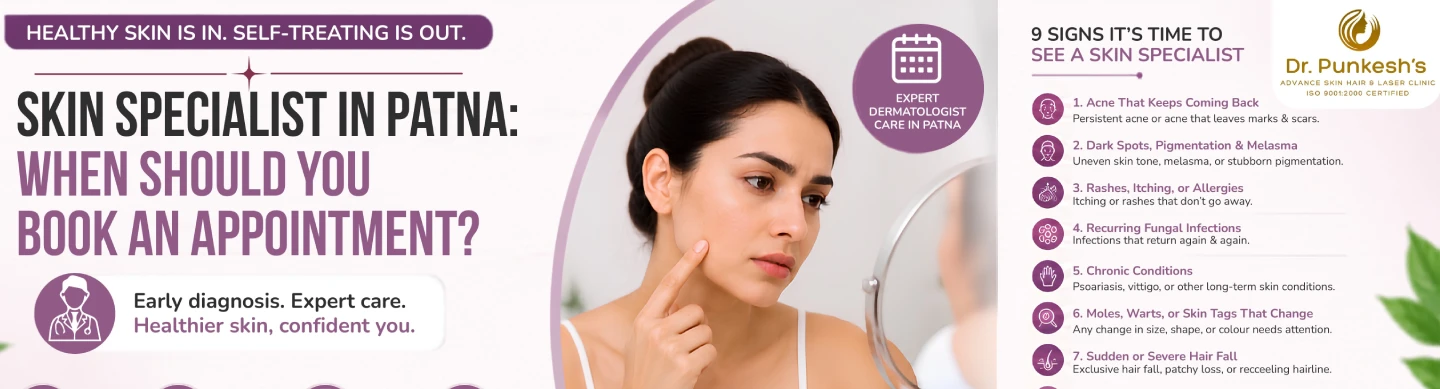
Most of us treat skin problems as an afterthought. A pimple? Apply whatever cream is in the cabinet. An itchy patch? It'll go away on its own. A dark spot? Just cover it with makeup. But your skin is the largest organ of your body — and when it keeps sending signals, ignoring them can turn a small, easily treatable issue into a stubborn, long-term problem.
So how do you know when a home remedy is enough, and when it's time to see a skin specialist in Patna? This guide covers the clear signs that you should stop self-treating and book a dermatologist appointment — and why acting early almost always means faster, cheaper, and better results.
Occasional pimples are normal. But if you have persistent or painful acne that doesn't respond to over-the-counter products, or breakouts that leave marks and scars, it's time for professional help. Untreated acne is the biggest cause of permanent acne scars — which are far harder to treat later than the acne itself.
Uneven skin tone, sun spots, and patches of pigmentation — especially melasma on the cheeks and forehead — rarely fade with creams alone. A dermatologist can identify the type of pigmentation and treat it with medical-grade options like chemical peels and laser toning.
An itch that lasts more than a couple of weeks isn't just annoying — it's a symptom. Conditions like eczema, urticaria (hives), and other skin allergies need proper diagnosis, because the wrong cream (especially misused steroid creams) can make them significantly worse.
Ringworm, itching in skin folds, or infections that return every summer are extremely common in Bihar's hot, humid climate — and are frequently mistreated with steroid-based combination creams bought without prescription. This creates resistant infections. If a fungal infection keeps returning, see a dermatologist instead of the pharmacy counter.
Scaly plaques of psoriasis or white patches of vitiligo should always be evaluated by a specialist. These are medical conditions, not cosmetic ones — and according to the American Academy of Dermatology, early and consistent treatment gives the best long-term control.
Any mole that changes in size, shape, or colour deserves prompt medical attention. Even harmless-looking growths like skin tags, warts, or corns and calluses are best removed safely by a dermatologist rather than home methods, which risk infection and scarring.
Dermatologists treat hair too. If you're losing more than the normal 50–100 strands a day, noticing patchy loss, or seeing a receding hairline, a specialist can diagnose the cause and offer proven options like hair fall treatment, GFC therapy, and mesotherapy.
Fine lines, wrinkles, dullness, and sagging skin respond best to early, medically supervised care — from anti-ageing facials to advanced treatments — rather than random products picked off a shelf.
Planning to try a viral acid, peel, or derma-roller at home? Book a consultation first. What works for an influencer's skin type can trigger burns, breakouts, or pigmentation on yours. According to the National Institutes of Health, many common skin diseases look similar to each other — which is why self-diagnosis so often goes wrong.
Skin conditions rarely stay the same — they either improve with the right treatment or worsen with the wrong one. Seeing a qualified dermatologist in Patna early means:
Accurate diagnosis — many skin problems look alike but need opposite treatments
Faster, cheaper recovery — early-stage conditions need fewer sessions and less medication
No permanent damage — scars, resistant infections, and spreading patches are mostly preventable Safe, evidence-based care — instead of trial-and-
error with pharmacy creams and home remedies
Key Takeaway: Don't wait for a skin problem to become "bad enough." If acne, pigmentation, itching, infections, hair fall, or a changing mole has lasted more than two weeks — or keeps coming back — that's your sign to book an appointment. Early diagnosis by a qualified skin specialist is always faster, safer, and cheaper than months of self-treatment.
If a skin problem lasts more than two weeks, keeps returning, or is getting worse, st op self- treating and consult a dermatologist.
No. You can book an appointment with a skin specialist directly.
Yes. Dermatologists treat hair fall, dandruff, alopecia, and scalp conditions along wit h skin issues.
Not without prescription. Misused steroid creams are a leading cause of worsening f ungal infections and skin damage.
The doctor examines your skin, may use a skin analyser, asks about your history, an d then suggests a personalised treatment plan.
Fees vary by clinic; the exact treatment cost is shared after diagnosis, based on your condition and sessions needed.
Disclaimer :The website content is created with the aim of imparting knowledge and information about the domain called Dermatology among the people. The treatments mentioned here must not be taken as prescriptions. Also, the result for any treatment will vary from person to person as per the skin and hair condition.