- Home
- About
- Treatments
- Testimonials
- Gallery
- Blogs
- Technology
- Contact
- Schedule A Consultation
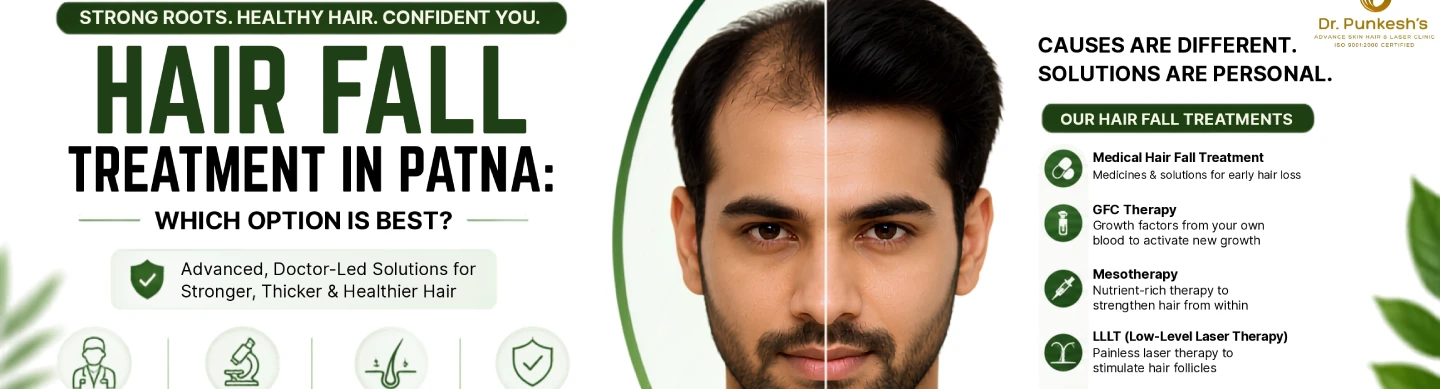
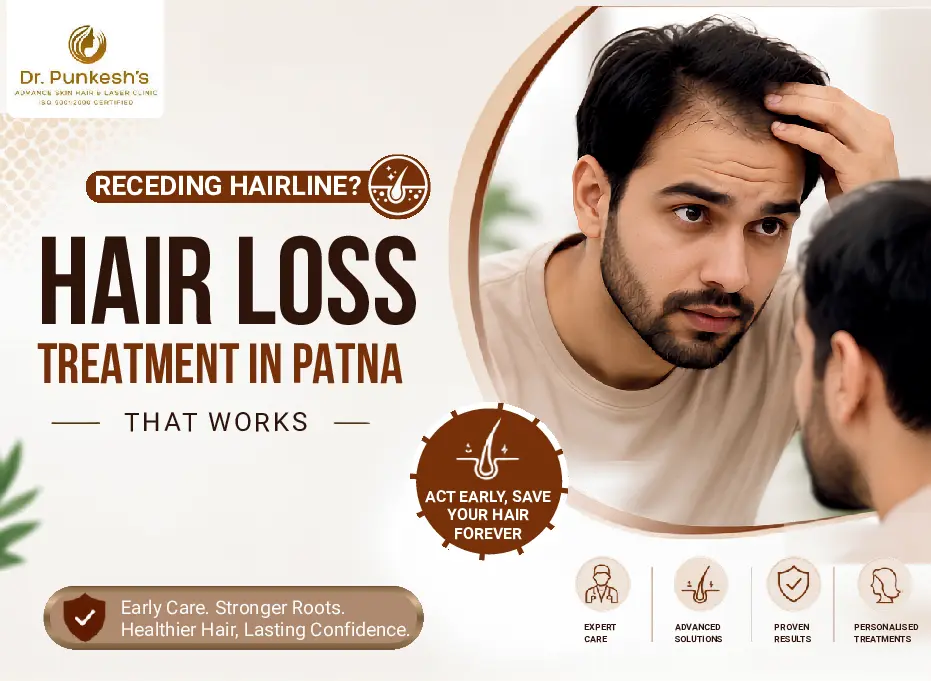
Losing 50 to 100 strands a day is completely normal — it's part of the hair's natural growth cycle. But when you start noticing more hair on your pillow, a widening parting, or a receding hairline, it's a sign that something deeper may be going on. Hair loss doesn't just change how you look; it can quietly chip away at your confidence too.
The good news? Hair fall is treatable — and the earlier you act, the better your results. If you're searching for the best hair fall treatment in Patna, this guide walks you through the most effective, medically proven options available today, and how to figure out which one is right for you.
There is no single "best" treatment — because there is no single cause of hair fall. The right treatment depends entirely on why you're losing hair in the first place. According to the American Academy of Dermatology, common causes include:
Genetics (androgenetic alopecia) — the most common cause of pattern baldn ess in both men and women
Nutritional deficiencies — low iron, vitamin D, B12, or protein intake
Hormonal changes — thyroid disorders, PCOS, pregnancy, or menopause
Stress and lifestyle — poor sleep, crash dieting, and chronic stress
Scalp conditions — dandruff, seborrheic dermatitis, or fungal infections
Alopecia areata — an autoimmune condition causing patchy hair loss
This is exactly why a proper diagnosis matters. At Dr. Punkesh's Advance Skin, Hair & Laser Clinic in Patna, treatment begins with a detailed scalp and hair analysis to identify the root cause — so the solution actually addresses the problem, not just the symptom.
For early-stage hair loss, clinically prescribed medications and topical solutions are often the first line of defence. A structured hair fall treatment plan helps slow down shedding, strengthen existing follicles, and stimulate regrowth. Combined with correcting nutritional deficiencies, medical management alone can produce visible improvement within a few months for many patients.
Best for: Early-stage hair fall, diffuse thinning, and maintenance after other procedures.
GFC therapy for hair loss is one of the most advanced regenerative treatments available today. It uses highly concentrated growth factors derived from your own blood, which are injected into the scalp to activate dormant follicles, improve hair thickness, and stimulate natural regrowth. Because it uses your body's own healing factors, it's safe and well tolerated.
Best for: Male and female pattern hair loss, thinning hair, and improving hair density.
Mesotherapy for hair delivers a customised blend of vitamins, minerals, amino acids, and other nutrients directly into the scalp. Think of it as targeted nutrition for your hair roots — nourishing the follicles from within, improving blood circulation, and creating a healthier environment for growth.
Best for: Hair thinning due to nutritional deficiency, dull and weak hair, and early hair loss.
LLLT (Low-Level Laser Therapy) is a painless, non-invasive treatment that uses safe, low-intensity laser light to energise hair follicles and stimulate growth at the cellular level. There are no injections and no downtime — making it an excellent option for those who prefer a gentle approach or want to boost results from other treatments.
Best for: Early to moderate hair loss, and as a supportive therapy alongside GFC or medication.
Microneedling with Dermapen creates thousands of controlled micro-channels in the scalp, which triggers the body's natural repair response and dramatically improves the absorption of growth serums and medications. It's often combined with other therapies for enhanced results.
Best for: Boosting the effectiveness of topical treatments and stimulating dormant follicles.
Sometimes the real culprit is the scalp itself. Persistent dandruff, seborrheic dermatitis, or fungal infections can weaken roots and accelerate hair fall. An effective dandruff treatment often brings hair fall under control without any advanced procedure.
Best for: Hair fall accompanied by itching, flaking, or scalp irritation.
For advanced baldness where follicles can no longer be revived, options like scalp micropigmentation (which creates the appearance of denser hair) or a hair transplant may be recommended after a thorough consultation.
Best for: Advanced-stage hair loss and baldness.
The honest answer: the one that matches your diagnosis. A 25-year-old with early genetic thinning, a new mother with post-pregnancy shedding, and a patient with patchy alopecia areata all need completely different treatment plans. What works brilliantly for one person may do nothing for another.
That's why the smartest first step isn't choosing a treatment — it's getting an accurate diagnosis from a qualified dermatologist. In many cases, the best results come from a combination approach: for example, GFC therapy supported by LLLT and medical management.
Led by Dr. Punkesh Kumar (MBBS, MD – Skin & VD), an internationally trained dermatologist with over a decade of experience in clinical and cosmetic dermatology, the clinic has been serving Patna since 2017 with evidence-based, world-class treatments. Dr. Punkesh is an International Fellow of the American Academy of Dermatology (USA) and a member of the European Academy of Dermatology & Venereology, with past associations at Safdarjung Hospital (New Delhi), PMCH, and IGIMS (Patna) — making him a trusted skin specialist in Patna and one of the most experienced hair doctors in Patna.
Here's what sets the clinic apart:
Scientific diagnosis first — advanced hair analysis before any treatment is suggested
Complete range of treatments — from medication to GFC, mesotherapy, LLLT, and more, all under one roof.
Proven track record — over 1,20,000 satisfied patients and 70,000+ procedures
Ethical, patient-focused care — honest guidance at reasonable costs
It depends on the cause. A dermatologist will suggest medication, GFC, mesotherapy, or LLLT after a proper scalp analysis.
50–100 strands a day is normal. More than that — or a receding hairline — needs a specialist's attention.
Yes. It uses growth factors from your own blood to regrow hair, so it's safe and well tolerated.
Most treatments show visible improvement within 3–4 months, depending on the cause and stage of hair loss.
Mostly no. LLLT is painless; injectable treatments cause only mild discomfort.
Yes, if follicles are still alive. For advanced baldness, hair transplant or scalp micropigmentation works better.
Costs vary by treatment and sessions — a consultation will give you an exact, personalised quote.
As early as possible — the sooner you start, the more hair you save.
Hair fall doesn't fix itself — but it can absolutely be fixed. The earlier you seek expert help, the more hair you save.
Hair fall has no one-size-fits-all cure — the "best" treatment is the one that matches the cause of your hair loss, not the one with the most hype. Genetics, nutrition, hormones, stress, and scalp conditions all demand different solutions: medication for early thinning, GFC therapy for pattern hair loss, mesotherapy for nutrient-starved roots, LLLT for a gentle non-invasive boost, and Dermapen to supercharge results. In fact, the most impressive outcomes usually come from a combination of treatments, guided by a proper scalp analysis. So skip the guesswork and the home remedies — get diagnosed by a qualified dermatologist first. And act early: every month you wait, you lose hair that could have been saved.
Disclaimer :The website content is created with the aim of imparting knowledge and information about the domain called Dermatology among the people. The treatments mentioned here must not be taken as prescriptions. Also, the result for any treatment will vary from person to person as per the skin and hair condition.